
Major British railway stations
London has fourteen terminals and they do not connect to each other. Knowing which one you need — and how long the walk is — is the difference between a calm departure and a sprint.
Skyward Bookings is an independent rail travel information service and is not affiliated with, endorsed by or sponsored by Amtrak, VIA Rail or any railway operator. Disclaimer
Which London station do you need?
Each terminal serves a different part of Britain. There is no central station, and transferring between them means the Underground or a taxi.
 KGX
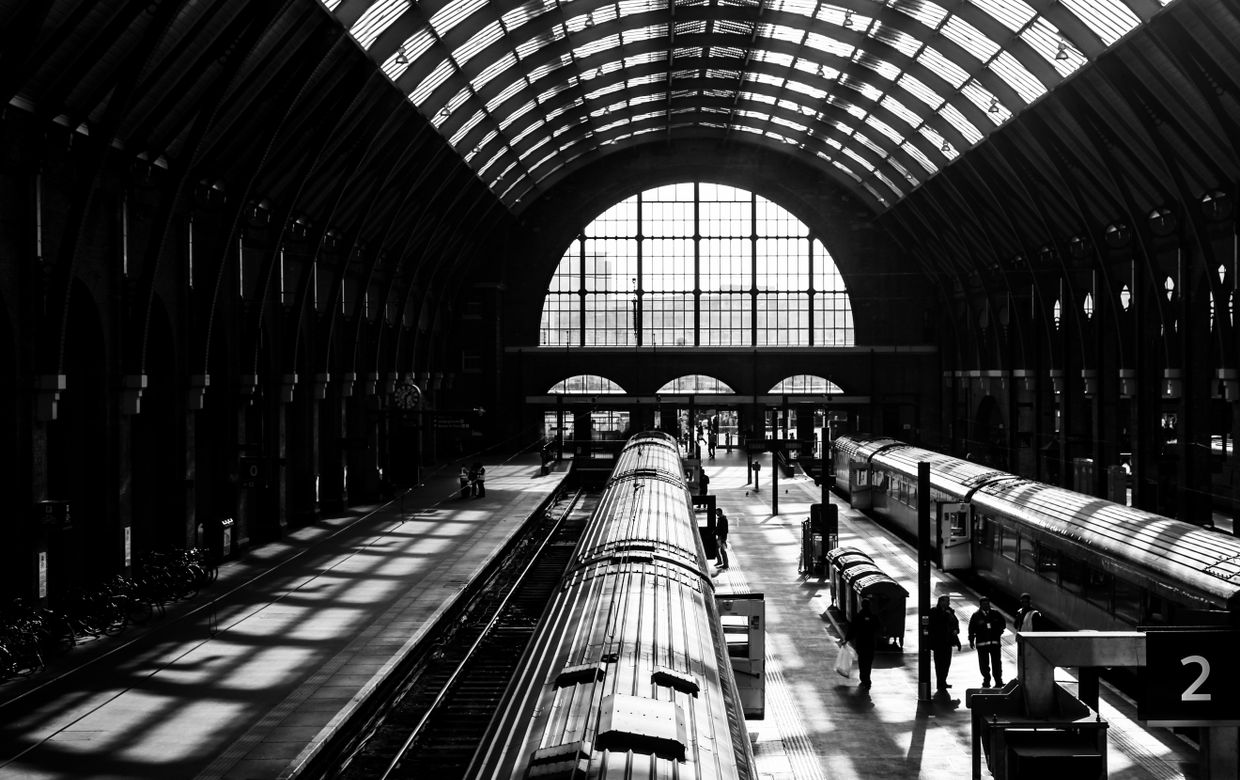
KGXLondon King's Cross
The southern terminus of the East Coast Main Line, with its 2012 western concourse now one of the most photographed…
 EUS
EUSLondon Euston
The gateway to the West Coast Main Line and the whole of north-west England, North Wales and western Scotland —…
 PAD
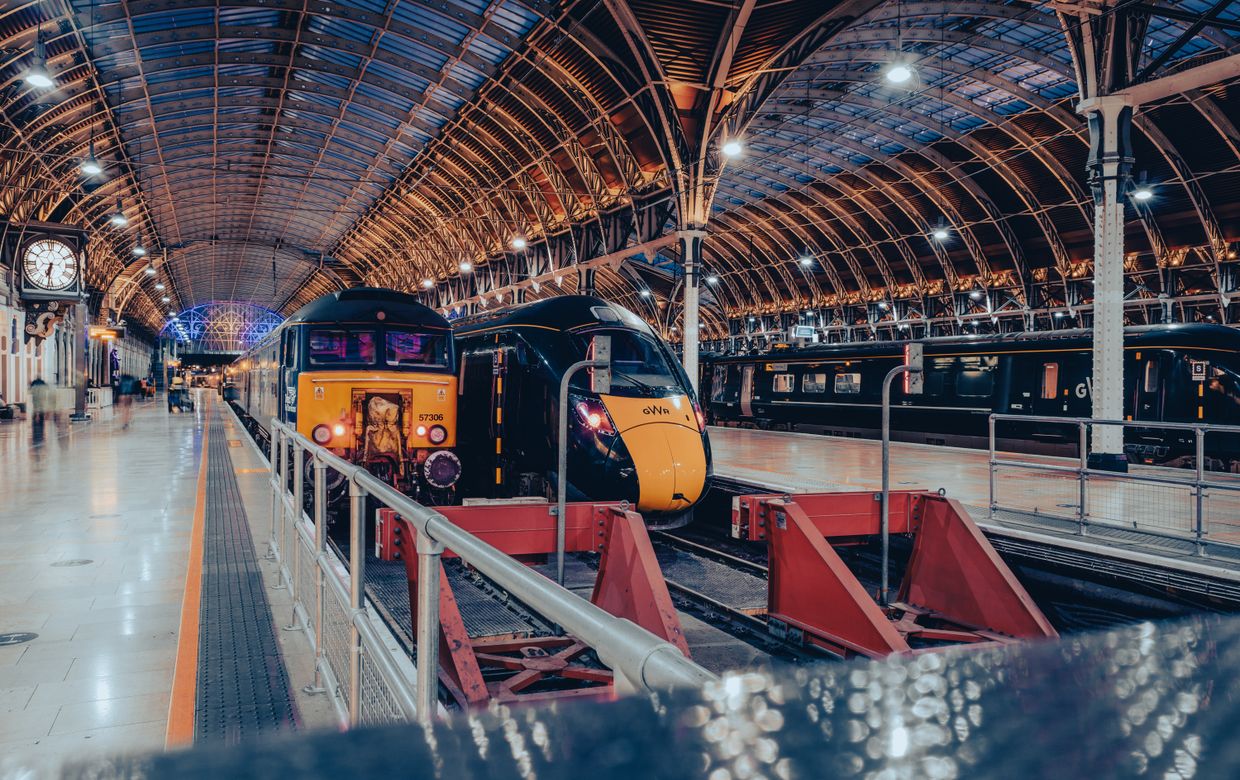
PADLondon Paddington
Brunel's masterpiece of 1854, with its triple wrought-iron roof still intact, serving the West of England, South Wales and Heathrow…
 STP
STPLondon St Pancras International
The finest railway building in Britain and the UK gateway to continental Europe, with Eurostar departures to Paris, Brussels, Rotterdam…
 VIC
VICLondon Victoria
The second-busiest station in Britain, serving the entire south coast and providing the fastest link to Gatwick Airport.
Regional hubs and great stations
 MAN
MANManchester Piccadilly
The busiest station in northern England and the hub of the entire North West, with direct services to Manchester Airport…
EDBEdinburgh Waverley
Sunk into a valley between the Old and New Towns beneath Edinburgh Castle — the only major station in the…
 GLC
GLCGlasgow Central
Scotland's busiest station and the terminus of the West Coast Main Line, with its famous glass roof and the "Highland…
 BHM
BHMBirmingham New Street
The busiest interchange outside London — more passengers change trains here than anywhere else in Britain — reopened in 2015…
 LDS
LDSLeeds
The busiest station in Yorkshire and the third-busiest outside London, and the southern gateway to the Settle–Carlisle line.
 YRK
YRKYork
When it opened in 1877 it was the largest station in the world. Its curving glazed trainshed remains one of…
 BRI
BRIBristol Temple Meads
Brunel's original 1840 terminus still stands beside the working station — the oldest surviving major railway terminus anywhere in the…
LIVLiverpool Lime Street
The oldest still-operating grand terminus in the world, opened in 1836, with two spectacular iron trainsheds in the centre of…
NCLNewcastle
Approached over the King Edward VII Bridge with the Tyne bridges lined up below, Newcastle Central has one of the…
CDFCardiff Central
The busiest station in Wales, a five-minute walk from the Principality Stadium — which makes international match days among the…
GLQGlasgow Queen Street
Rebuilt with a soaring glass frontage in 2021, Queen Street is the starting point for the West Highland Line and…
Arriving at a British station
Platform numbers appear late. At London terminals, particularly Euston, the platform is frequently announced under ten minutes before departure. Stand near the departure boards rather than sitting in a café at the far end of the concourse.
There are ticket barriers. Most major stations have automatic gates. Keep your ticket accessible, and if you are using a split ticket, have both parts to hand — gate staff are used to it and it is entirely legitimate.
Transferring between London terminals takes time. King's Cross and St Pancras are adjacent. Everything else requires the Underground. Allow at least 45 minutes between arriving at one terminal and departing from another, more at rush hour.
Assistance is a national scheme. Passenger Assist operates across every operator and can be booked with as little as two hours notice, though arranging it with your ticket is better. We log it at the time of booking.
Airport connections
- Heathrow — Heathrow Express to Paddington (15 min) or Elizabeth line (slower, much cheaper)
- Gatwick — Gatwick Express to Victoria (30 min), plus Thameslink and Southern services
- Manchester — direct rail into Piccadilly, four trains an hour, 15 minutes
- Edinburgh — tram from the airport to St Andrew Square, near Waverley
- Stansted — Stansted Express to Liverpool Street
